Showing posts with label coral reef. Show all posts

Friday, 14 August 2015

Why couldn’t the Clownfish buy a house?


 Because he didn’t have anemone!

-----

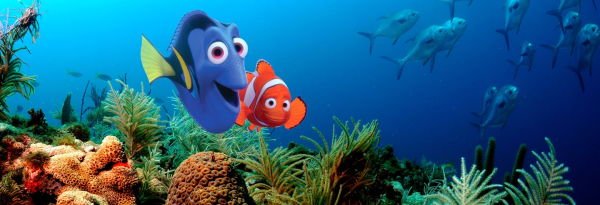
As part of our work in Perhentian, we have started to try and document and identify as many different species as we can, and we thought we’d start you all off with a volunteer favourite, Nemo!

You may or may not know that Nemo is a False Clown Fish (Amphiprion ocellaris), not your typical Clown Fish (Amphiprion percula). You may also be interested to know that Nemo and his ‘false clown fish’ daddy are just one of at least 20 different Anemonefish species. Because people love Anemonefish, and commonly mistake them all as Nemo or Clownfish, we thought we’d provide you a simple breakdown and summary of the different varieties we get here in Perhentian.

Anemonefish live in symbiosis with their anemones, that is, both the anemone and the fish give and receive something necessary to survive! The anemone protects the clownfish from potential predators and are provided a food source (algae and other creatures caught stung by anemone), whilst the clownfish has been suggested to do a wiggle dance that increases the oxygen flow through the anemone for a healthier lifestyle!

----

1.      
False Clown Fish (Amphiprion ocellaris)

The False Clown fish is orange, with three white bars and grow up to about 9cm. When they initially hatch they hang out near the surface, but quickly descend in search of an anemone in which to live. They are territorial and aggressive about it, and very protective of their domain and family, swimming out of the anemone to bite and harass would be attackers (even innocent by-standing divers just admiring their beauty!


Clark’s Anemone Fish (Amphriprion clarkii)

Clark’s Anemone fish are black to entirely orange with a pair of white or pale bluish bars. The tail is white or ellow with an abrupt boundary. Can grow to 12cm. Is omnivorous and will feed on zooplankton as well as algae. Helps to defend the anemone from would be attackers, such at Butterfly fish which may attempt to eat tentacles of anemone.


Pink Anemone Fish (Amphiprion perideraion)

The Pink Anemone fish is a common one in Perhentian, and found at most dive or snorkel sites. It is pink to orange with a narrow white head bar and a white dorsal stripe between the eyes going along the back. Commonly found with the Magnificent Anemone up to 20m depth. They can grow up to 10cm. As with other Anemone fish species, omnivorous species that feeds on both algae and zooplankton. Unlike the first two species mentioned, the Pink Anemone fish is much shier and hides within their anemone when divers approach. 


Red and Black Anemone Fish (Amphiprion polymnus)

The unique and excitingly named Red and Black Anemone fish is unsurprisingly reddish orange with varying amounts of black on the sides, and a white to pale bluish bar on the head, just being the eyes. Juveniles have 2-3 whitish blue bars. This one is sometimes called the Cinnamon clown fish and similar to the False Clown and Clark’s, can be aggressive towards invasive peoples. Only found in three anemone types; Bubble Tip, Leathery and Magnificent.


Saddleback Anemone Fish (Amphiprion polymnus)

Probably my favourite of the Perhentian Anemone fish, the Saddleback has varying amounts of black to dark brown and yellow-orange, with a white head bar and broad oft forward slanting mid-body bar. Usually found with Haddon’s Anemone on sandy bottoms. The first sighting was at Police Wreck, sitting off the wreck in the sand at about 21m depth, since then we have found a few locations around the islands. Their defence mechanism appears to be less aggressive than other species, they dance around in the water like madmen to distract you from the anemone (and baby fish). Crafty diversion strategy.


Tomato Anemone Fish (Amphiprion frenatus)

The aptly named Tomato Anemone fish tastes exactly like a tomato, or maybe just looks like one. Males are orange to red with a single white or pale bluish head bar, the males are considerably smaller than the females at only 6cm. Females grow to 14cm and are primarily black on the sides with a red snout breast and belly. Typically live with Bulb-tentacle anemone up to depths of 12m. They lay their eggs on a flat surface and both tend to them until they hatch (6-11 days).


Hopefully you have been inspired to further research fish and join us in Perhentian for some fun identification and diving times! Get in touch for more information!

Saturday, 4 July 2015

Corals; Adapting to Change


 Coral is a remarkable animal. Creators of some of the biggest and most valuable natural structures on Earth, they shape the environment around them to suit their needs, developing complex structures and harnessing support of algae to maximise their output.

Diving on a coral reef is an experience quite unlike any other. The variety of life surrounding you is truly astonishing, with as many as 3,000 different marine species living on one reef. Many of these species are cryptic, masters of disguise whilst others are brightly coloured to ward off predators. Whilst many divers visit the reef to witness these more cryptic or colourful fish, the corals themselves provide an opportunity to be rightly amazed. The variety of shapes, sizes and colours of just Genus is enough to confuse even the dedicated spotters, but their beauty lies in their complexity and simplicity combined. Within their structures live tiny polyps, little more than small stinging tentacles connected to a mouth and stomach.

It is fantastic to think that such tiny, simple creatures have created structures such as the Great Barrier Reef of Australia and are the foundations for the Coral Triangle, an ecosystem that is home to over 2,000 fish species as well as six out of the seven Sea Turtle species and upon which over 120 million people rely on in their daily lives.

Of course, as a race, we have over-exploited our oceans and planet to such an extent that corals are in constant threat of destruction and harm. From fish bombing in the Philippines and Malaysia to tourism and pollution in the Caribbean and South America and even climate change in our atmosphere, corals are in danger of harm from all angles, and that isn’t even mentioning the constant battles they face against each other on the reef!

Corals however, are not just going to roll over and give up. Once again, they continue to amaze and have begun to show remarkable signs of recovery and resilience against our many actions. Already in 2013, NOAA released a study that commented at present levels of CO2, Corals have the potential to evolve and adapt genetically to warming temperatures, potentially allowing longer survival until 2100. Of course, not all species are expected to make the necessary adaptations, and Darwin’s survival of the fittest will again be prominent, but that some corals may adapt is fantastic news.

More recently (this month!) NewScientist release an article stating that not only are some species able to adapt to warming temperatures, they are able to pass this trait genetically to their offspring, showing relatively rapid evolution in the face of threat and change. There is even evidence to suggest that by choosing the right algae (Zooxanthellae), adult corals can increase their heat resistance by 1.5degrees! They also found evidence that some corals in Palau, living in acidic waters have also shown no signs of detrimental change, though they are yet to identify the reason for this.

We, as a race, continue to bombard our environment with plastic, pollution, oil whilst simultaneously over-exploiting and over-extracting. Yet nature will continue to fight back, we may destroy 90% of it, but at some point, we will fall, balanced so precariously on a knife edge, and destroy ourselves in the process.


The evidence is building that coral is more resilient than we first thought which is awesome. Coral and nature, is amazingly fantastic, showing signs of evolution even in our short time on this Earth. It is wondrous and beautiful and we need just to open our eyes and marvel at it and maybe, just maybe, our actions would change, for the better. 

Friday, 22 May 2015

International Day for Biological Diversity


Today, we celebrate International Day for Biological Diversity, a bit of a mouthful, but an important day to reflect on our environments, ecosystems and biological surroundings and to understand their importance. As I write this, I sit on a tropical island, surrounded by rainforests, white sandy beaches and stunning coral reef environments. So it is perhaps very easy for me to sit and talk about the importance and value of these systems and their biological diversity, but if you spend a few minutes to think about the environment you live in, I am sure you will find equally important links.

2015’s theme is ‘Biodiversity for Sustainable Development’. When people think of biodiversity and development together, they usually see it as development destroying biodiversity (the eco-warrior view) or biodiversity preventing development (the corporation view). In reality, there is no reason why the two things cannot work together, technology has advanced to a stage where there is no reason we can’t accommodate biodiversity in our lives and development; Sustainable Development.

To understand what sustainable development is, we first need to know what sustainable means. The most commonly used definition is taken from ‘Our Common Future’ (1987) states:

"Sustainable development is development that meets the needs of the present without compromising the ability of future generations to meet their own needs”

Within this, they consider two key notions, firstly the notion of ‘needs’, particularly those of the world’s poorest, to which key consideration should be given. Secondly the notion of limitations felt by technology and society on the ability for the environment to meet said needs.


As I already said, it is very easy for me to consider biological diversity where I am due to the very obvious importance of the ecosystems and development for the local community. There are inherent links between the local community and the biological diversity of the islands. The relationships between development, society and the environment are complicated and difficult, which just further highlights the importance of considering sustainable development.


So this highly scientific and complicated looking image clearly took hours of research and time to develop…Ok fine, it didn't, but it can quickly highlight the relationships and importance of sustainable development within the Perhentian Islands.

The community rely, predominantly, on tourism to remain economically sustainable. Tourism, in turn relies on a number of factors, resorts, rainforests coral reefs and turtles. A simple questionnaire we conducted last year showed that 60% (n 274) of tourists wanted to see a turtle, whilst 80% said they had already, or planned to go on a snorkel tour during their stay. Both of these aspects highlight the importance of biological diversity through the importance of the presence of coral reefs and turtles for sustainable development. In order to develop the islands, there must always be a consideration for these aspects, including the threats (Sedimentation, over fishing, waste management) that come hand in hand with development and deforestation.

Why is biological diversity important in a coral reef you ask? Let’s look at the well-researched and complicated diagram below to help us understand…


The image that was carefully put together above highlights the varied intricacies found within an ecosystem. This is a highly simplified diagram, so please do not take it as absolute. We can see that Fish are involved in many interactions, which is because this category includes numerous species with varying behaviours! 

Parrotfish, Butterflyfish, Damsel fish and other grazers can often be found eating algae from the reef, without them, the algae would be given too much of a free reign and could over grow the reef, smothering corals (not feeding on, just smothering), a similar scenario could exist if nutrient levels were to increase excessively, such as an area where no proper sewerage were present and waste flowed or leeched directly into the sea. Likewise, excessive removal of predator species at the top of the food chain, can result in explosions in the fish category, meaning reduced levels of invertebrates and algae.

Ecosystems are carefully balanced and naturally fluctuate annually and seasonally, but in areas where development is occurring, like Perhentian, it is vital that it is competed sustainably, considering the long term implications and careful management of the biological diversity in-line with the societal and economic success. 


Saturday, 18 April 2015

A Survey to Remember: Reef Check

 Since our last volunteer, Rachel, finished her time with us, we have been relatively quiet, keeping ourselves busy painting signs for a local food store, setting up our new compost bin and managing our garden, with the occasional dive thrown in for training purposes.


Sabi's planted goodies
Dave adding finishing touches to sign
Neil's compost bin


This week however, we were joined by Sue and Alvin of ReefCheck Malaysia, who were visiting the islands to conduct their annual Reef Check surveys. If you followed our research last year, you will know that our methods are adapted from the original Reef Check methodology, so it is all very relevant, and Reef Check visit the islands once a year to monitor the health of 10 coral reef sites.


Alvin (left) and Sue (right) at the end of our Batu Layar survey

Last year, both Sabina and I (Neil) were lucky enough to be trained, along with Seh Ling from Ecoteer, as Reef Check Eco-Divers. This year, we (Blue Temple) offered to collaborate with Reef Check on their surveys, providing accommodation and assistance (and tanks, which they refused!) to work together to collect their all-important data.

So, it came to pass that on the morning of Tuesday 14th April 2015, Sue and Alvin arrived, via a night bus at Perhentian, ready to get started. The schedule was quite straight forwards, two days of 3 dives, conducting 6 of the 10 surveys required, with the final day being completed with the Marine Park staff, except that the Marine Parks had doubled booked, opening the door for us to assist with all 10 surveys (Awesome!)

Sabi, Alvin and Seh Ling doing Invert and Substrate surveys

Alvin getting up close and personal with substrate

Invertebrate Team - Sabi and Seh Ling

Neil seeking Inverts

Sue studying substrate


I won’t bore you with all the details, but let’s just say that with Sue, came bad weather. Day 1 was stormy, rainy and choppy. Day 2 was grey, swelly, choppy and poor visibility. Day 3 was even more choppy, and worse visibility, followed by the 10th and final dive where Shark Point was calm, good visibility and awesome! Finished on a high.

The surveys, collecting data for Fish populations, Invertebrate populations and substrate type are conducted at sites across Malaysia (and globally) every year, with annual reports written to provide an insight into health of reef ecosystems and a direction of change (getting better or getting worse).

We had a fantastic, though challenging time doing the surveys. Every survey brought a new challenge with direction of swell, visibility, struggling to find the start point, but the importance of the work and enjoyment you can get from contributing to such surveys and work is amazing. We truly enjoyed our few days!

Yellow-margin Moray Eel - spotted at Shark Point 

Black-spotted Moray spotted at Rawa Island


We would like to again thank Sue, Alvin and Reef Check Malaysia for letting us be a part of it all, we had a fantastic time and it was a pleasure to meet people as passionate and dedicated to marine conservation as you. We are already looking forward to next year!


Peace out.
If you would like to participate in Reef Check Surveys, all you need to do is contact your nearest Reef Check headquarters and ask about becoming a Reef Check Eco-Diver. This will allow you to participate in surveys within your region! It opens up a whole new world of interest for divers!

Wednesday, 25 March 2015

Coral Nursery

As we await the the decision on the permits for coral nursery development and reef monitoring, we have had to establish our other research targets first. However, thanks to the Dept. of Marine Parks, we were lucky enough to be invited to a local MP training event for the construction and deployment of a 3rd generation coral nursery frame.


Thanks to Albert of the Marine Parks for the demonstration and information!

Two identical layers create the nursery frame and are first laid out on the ground ready

The local Marine Park guys had the first crack at putting together the frame

Then, alongside Ecoteer we had a go. We used PVC glue to hold the frames together

The two frames were aligned and legs established

Then glued together to create a sturdy frame for new coral nubbins

The frames stand 2m x 1m and are made of UPVC plastic pipes and held together with PVC glue. A large and solid structure that houses a coral nubbin every 10cm, meaning one nursery tray can be home to 60 individual colonies. Aiming to 10 trays per site means 600 colonies being restored! Amazing

Zip ties were inserted into pre-drilled holes ready for transplanting coral nubbins easily and quickly

The Marine Park team then deployed the frame into the water at Tuna Bay to add to the growing artificial reef/nursery they have there. With them they took some old toothbrushes to clean some of the older frames.

We will soon visit the site to get an idea of what it looks like underwater. A fantastic morning full of educational information. A massive thank you to the Department of Marine Parks for inviting us along to see how it is done. Fingers crossed the permits get approved and we can get our own nursery up and running!

Wednesday, 25 February 2015

Remember what lies beneath


Are you planning on going away on holiday soon? Perhaps to a idyllic location with beautiful white beaches and tropical waters? 

If you are, make sure you prepare fully before you go, and we are not just talking about packing sun-cream and your snazzy Hawaiian shirts. We want you to prepare mentally. 


Did you know, in 2014, over 80% of participants in our survey who visited Perhentian last year went snorkeling. That is a staggering proportion of people, and highlights the attraction the marine life has to us. I am also pretty sure that if you go on holiday to a beach location, you will be getting in the water for a swim or snorkel.

With this in mind, we would like you to take some time to consider just what lies beneath. In a coral reef ecosystem, you can find thousands of animals and species all hunkered together, working and living in balance. Some of these species, like corals, can take years to grow, living in colonies and working in symbiosis with algae, helping remove carbon from the atmosphere, and providing a home to thousands of important fish and marine species. 

Corals, although they look like rocks, are fragile and very susceptible to stress and change. You might notice broken corals lying on the floor, often broken by natural causes, but commonly by carefree tourist behaviour, those that are white are also at risk, either bleached or already dead they have expelled the algae that provides the majority of sustenance and are on the verge of (or are already) dead.

We ask simply that you remember what a coral is and when you head out into the sea to snorkel, you don't need to stop and stand up, even if you think you are standing safely, there are loads of different varieties of corals, and even some species of fish and invertebrate that camoflage themselves and can be painful for you. 

Yesterday we went snorkeling, our hearts died a little bit inside. Even after people were told of the impacts, they continued to do it. Don't be one of the crowd, look closely and in one square meter you will see so much life. Imagine a giant foot coming down on London or New York City, it might not kill everything, but the stress caused could be irreparable. 

 No

 No


or, alternatively...


Please think twice when you are out in the waters, so much damage can be avoided!


Thursday, 5 February 2015

We didn't listen!

”Global Warming is going to strike… two days before the day after tomorrow”

“Oh my God...That’s today!”


What is your opinion of climate change? Do you ‘believe’ all the scientists? Or see the changes in the world as natural occurrence? Or blindly ignore everything and drink beer whilst shooting stuff?

I am two out of three. I believe scientists when they tell us our planet’s climate is changing, and that a lot of it is down to human action, but I also realise that a lot of things happen naturally. It is becoming nigh on impossible to deny climate change, but I bet you can still find people out there who think it isn't happening or even welcome change that might see a warmer climate for them

In fairness, I have been through years of school, college and university to have an education that allows me to understand the cause and effect situation we find ourselves in. A lot of people haven’t, they wouldn't see climate change as a big problem until it knocks on their door and pours water through their windows. Which I understand, why worry about something that seemingly doesn't affect you.

It seems to me that every few months new research is published stating different opinions on climate change, different causes or outcomes. Which would make it much more difficult believe what scientists say.If your old school teacher changed the answer to 1+1 every week, you might not believe them for long either, so we can understand the split opinion within the public.


The impact of climate change on the oceans has been widely researched, and various factors considered, reconsidered and concluded. Recently, a group of scientists deemed that coral reefs will be sensitive to sea level change(Harris et al, 2015), but evidence has shown the ability to cope with small increases. They claim the connection between sea level and coral growth/survival is quite apart from other aspects such as ocean warming, acidification and pollution.

On the same day it was announced that the Great Barrier Reef could decline to less than 10% coral cover if ocean warming continues (Spencer, 2015).

Sea level rise will not occur only because of the potential melting of the ice caps, as the sea temperature increases, its volume will increase, resulting in a sea level rise. The warmer temperature itself will result in death of corals, but the increased depth will reduce light and cause extra stress, causing us to question whether corals will grow and adapt to sea level change, suggested by Harris et al.

You see, I have confused myself with all that, let’s just agree that we should all do what we can to help reduce our impacts:

Enjoy the Little Things

Go for a walk, marvel at nature and the wondrous connections and interactions within. Take an interest in the world and ask questions, what, how, why. You might just find value in something you have had all your life.

The Blame Game

Don’t blame other people, countries or the politicians for the state of the world. Sure, China may have high emissions, and Brazil may be chopping down loads of it’s rainforests whilst overfishing is destroying balance. Look at your own life first, be the change.

The Usual Suspects

If you have read this blog or any others out there, then I don’t need to list and explain them all separately; turn off lights/plugs, avoid plastic, don’t waste water, eat sustainably sourced food, don’t buy tropical hardwood furniture etc.